
 If you’re waiting until November to start thinking about holiday sales, you’re already late.
The holiday shopping season doesn’t begin when the turkey hits the table. Customers start researching gifts, comparing prices, making wish lists, and watching for deals well before Black Friday. For small business owners, that means October is not “too early.” They are your opportunity to get positioned before everyone’s inbox, social feed, and advertising space become crowded with holiday promotions.
The good news is that you don’t need a huge advertising budget to have a strong holiday season. You need a plan, a compelling offer, consistent promotion, and a reason for customers to buy from your small business instead of Amazon or Walmart.
The holidays can be one of the most profitable periods of the year, but sales won’t magically appear because you put a red bow on your website. It’s time to launch your holiday sales NOW. Here are 10 things you should be doing.
- Set Your Holiday Sales Goal
Before you create a single promotion, decide what success looks like. How much revenue do you want to generate between now and the end of December? Look at your typical monthly sales, last year’s holiday results if you have them, your current customer base, and your capacity to fulfill additional orders.
Don’t just say, “I want to sell more.” Give yourself a number. If your holiday sales goal is $50,000 and your average transaction is $250, you need approximately 200 transactions. Now you have something you can build a sales plan around.
Break your overall target into weekly goals and track your progress. Track revenue, number of orders, average transaction value, website conversions, email sales, and your best-performing offers. Your goal gives you something concrete to manage instead of waiting until January to discover whether your holiday campaign worked.
- Decide What You’re Going to Bundle
 Please do not put your entire inventory or every service you offer on sale.
Your holiday promotion needs focus. Choose the products, services, packages, gift cards, bundles, or experiences you most want to sell. Think about what makes sense as a holiday purchase and what will be easiest for customers to understand.
Bundling can be particularly powerful. Instead of discounting three individual products, combine them into a holiday gift package. A consultant could create a year-end strategy session. A salon could sell a holiday beauty package. A bakery could offer a corporate gift box. A coach could package a planning session with a workbook or digital resource.
The goal is to make the buying decision easier. Give your holiday offer a name, establish the value, set the price, and make it feel special. Customers should understand immediately why this offer is different from what you sell all year.
- Start Warning Your Email List Now
Your email list is one of your most valuable holiday sales assets because you don’t have to pay an algorithm every time you want to communicate with your customers.
Create a holiday-specific incentive to encourage people by letting them know major discounts are coming. Offer early access to holiday deals, a gift guide, a special discount, a free resource, or VIP access to your biggest promotion.
Then segment your list. Your existing customers shouldn’t necessarily receive the same message as someone who has never purchased from you. Past customers might receive a loyalty offer or early access. Prospects may need more education and trust-building before you ask for the sale.
Please don’t wait until Black Friday to send your first holiday email. Start warming up your audience now. Tell them what’s coming. Share helpful content. Tease new products. Highlight customer favorites. Build anticipation before you start asking for the sale.
- Give Your Best Customers VIP Treatment
 Your existing customers should be the first people you think about during the holiday season. They already know you. They already trust you. Most importantly, they have already demonstrated that they are willing to spend money with your business.
Create a VIP holiday offer specifically for them. Give them early access to new products, private shopping hours, an exclusive bundle, a loyalty bonus, free shipping, priority scheduling, or a special gift with purchase. You can also reach out personally to your best customers. A thoughtful email, text, phone call, or handwritten note can generate more business than another generic social media post.
Don’t make loyal customers watch brand-new customers receive all the best deals. Reward the people who helped build your business.
- Create a Holiday Gift Guide
Customers don’t just need discounts during the holidays. They need ideas.
That’s why a holiday gift guide can be such a powerful sales tool. Organize your products or services around the people customers are shopping for or the problems they are trying to solve.
You might create categories such as Gifts Under $50, Gifts for Entrepreneurs, Gifts for Mom, Gifts for Food Lovers, Last-Minute Gifts, Employee Appreciation Gifts, or Gifts for the Person Who Has Everything.
Service businesses can do this too. Gift certificates, consultations, classes, memberships, subscriptions, experiences, and digital products can all become gifts.
Your gift guide can live on your website and then be repurposed into email campaigns, Instagram carousels, Pinterest content, short-form videos, blog posts, and social media graphics. One well-designed gift guide can fuel weeks of holiday marketing.
- Plan Beyond Black Friday
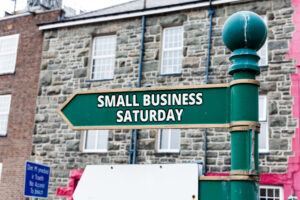 Black Friday gets the attention, but it should not be your entire holiday strategy.
There’s also Small Business Saturday, Cyber Monday, Giving Tuesday, shipping deadlines, last-minute shopping, Christmas, Hanukkah, Kwanzaa, New Year’s Eve, and the post-holiday period. Depending on your customers, some of those dates may matter far more than Black Friday.
Small Business Saturday is an especially natural opportunity for independent businesses to tell customers why shopping small matters. Don’t just scream “SALE!” Tell your story. Show the people behind your business. Explain what a purchase supports. Highlight your community involvement.
Build a holiday promotional calendar now so you know what you are promoting each week. Your marketing should have a rhythm rather than becoming a frantic series of last-minute posts.
- Get Your Website Holiday-Ready
If you’re going to drive more people to your website, make sure it is ready to sell.
Start with your homepage. Can visitors see your holiday offer immediately? Is there a clear call to action? Are your best products easy to find? Can customers quickly understand shipping deadlines, delivery options, return policies, and gift-card availability?
Then test the buying process on your phone. Mobile matters because customers may discover you on social media and purchase without ever opening a laptop. Make sure buttons are easy to click, forms aren’t unnecessarily long, product photos load properly, and checkout doesn’t feel like an obstacle course.
Also prepare a 4-email sequence for your abandoned carts. Someone who adds an item and leaves is a hot prospect. A well-timed reminder email could bring that sale back.
Don’t spend money driving holiday traffic to a website that makes it difficult to buy.
- Turn Social Media Into a Holiday Sales Channel
 Your social media content needs to shift as the holiday season approaches. People need to see your offer more than once before they act, so don’t be afraid to promote.
Show your products in use. Demonstrate your service. Create gift ideas. Answer common questions. Share testimonials. Post behind-the-scenes content. Highlight limited quantities. Show how orders are packaged. Introduce your team. Feature happy customers. Use video to explain why your offer makes a great gift.
Most importantly, tell people how to buy. Not every post should be a sales pitch, but your audience should never be confused about what you sell or where to get it.
You can also create urgency without becoming obnoxious. “Order by December 15 for guaranteed Christmas delivery” is useful information. “Only 20 holiday boxes available” is appropriate if it’s true. Real deadlines help customers make decisions.
- Go After Corporate Holiday Sales
Don’t overlook B2B holiday opportunities. One corporate customer could place an order worth dozens of individual consumer purchases.
Companies need gifts for employees, customers, vendors, referral partners, board members, and event attendees. If you sell food, apparel, books, beauty products, specialty goods, professional services, gift cards, experiences, or customizable products, think about how you could package your offer for corporate buyers.
Create a simple corporate holiday package with quantity options, pricing, customization information, ordering deadlines, and delivery details. Then start outreach now. Corporate buyers often need approvals, invoices, vendor paperwork, customization, and shipping coordination, so they typically need more lead time than an individual shopper.
Reach out to your existing corporate contacts first. Then target local businesses, professional firms, associations, nonprofits, and organizations where you already have relationships.
- Sell Into January, Not Just December
 The holiday season doesn’t end on December 25.
December 26 can start another sales cycle that could roll until Jan 31. Customers have gift cards. Some received cash. Others are making returns. Business owners are planning for the new year. Consumers are thinking about fitness, finances, organization, careers, personal development, and fresh starts.
Start planning your New Year promotion before the holiday rush begins.
Service businesses should pay particular attention to this. Coaching, consulting, fitness, financial services, professional development, organization, technology, marketing, and business services can all benefit from the “new year, new goals” mindset.
You can also use holiday purchases to drive repeat business in January. Include a January coupon with December orders. Give gift-card buyers a reason to purchase something for themselves. Invite holiday customers into your loyalty program. Add them to your email nurturing sequence—with permission—and encourage their next purchase.
The smartest holiday strategy doesn’t just produce a December sales spike. It creates customers who come back.
Don’t Wait for the Holidays to Start Selling
Here’s the bottom line: holiday sales are won before the holidays.
Businesses that show up in November with a random 20-percent-off graphic will compete against thousands of others doing exactly the same thing. The businesses that start now have time to build their lists, develop stronger offers, warm up their audiences, secure corporate orders, optimize their websites, and create consistent promotional campaigns.
Start with your sales goal. Decide what you’re selling. Package your best offers. Build your email list. Reward existing customers. Create your gift guide. Map out your promotional calendar. Prepare your website. Develop your social content. Start corporate outreach.
 Then execute.
And remember, you don’t have to beat Amazon at being Amazon. Small businesses have advantages the giants can’t easily duplicate. You can provide personal service. You can curate unique products. You can build genuine relationships. You can tell your story. You can respond quickly. You can create memorable experiences. And you can make customers feel appreciated instead of making them feel like order number 8,742,921.
So stop telling yourself you have plenty of time.
Your holiday selling season starts NOW.
The post Launch Your Holiday Sales NOW! 10 Ways Small Businesses Can Win the Holiday Shopping Season appeared first on Succeed As Your Own Boss.